 Cybersecurity Recruitment
- Why We're Different
- What We Do
- Funding Data
- Media
- Job Seekers
- Contact
- Get the Data
The Cliff Series · Part 1
There’s a piece of arithmetic that shapes every GTM search in cybersecurity, and it doesn’t care where we are in the funding cycle. Capital moves a lot faster than the talent pool does.
We track every disclosed cybersecurity vendor funding round and acquisition, and the pattern holds no matter what shape the market takes.
When funding surges, every round carries a hiring plan. Founders adding contributors to meet the demands of acceleration, most of it landing in the six to twelve months after the round closes.
When funding eases and consolidation picks up, the demand doesn’t disappear. It changes form. Acquisitions mean integration, retention conversations, backfills, and acquirers building out GTM for newly absorbed product lines.
When the market skews early stage, new companies mean first GTM hires. The first sales leader, the first marketing hire, the first two enterprise reps. Those hires carry more weight per seat than any other hires the company will make.
Whatever kind of quarter it is, the output is the same: hiring plans. All sourcing from the same talent pool.
The Tier 1 GTM cyber talent pool doesn’t grow because capital showed up.
There is no replacement for experienced GTM operators. Tech they’ve sold, categories they’ve helped scale, cycles they’ve actually run. You don’t manufacture more of them in a quarter, and you don’t manufacture more of them in a year either.
So demand reshapes itself every quarter while supply stays close to fixed, and the gap shows up whether the funding chart is pointing up or down.
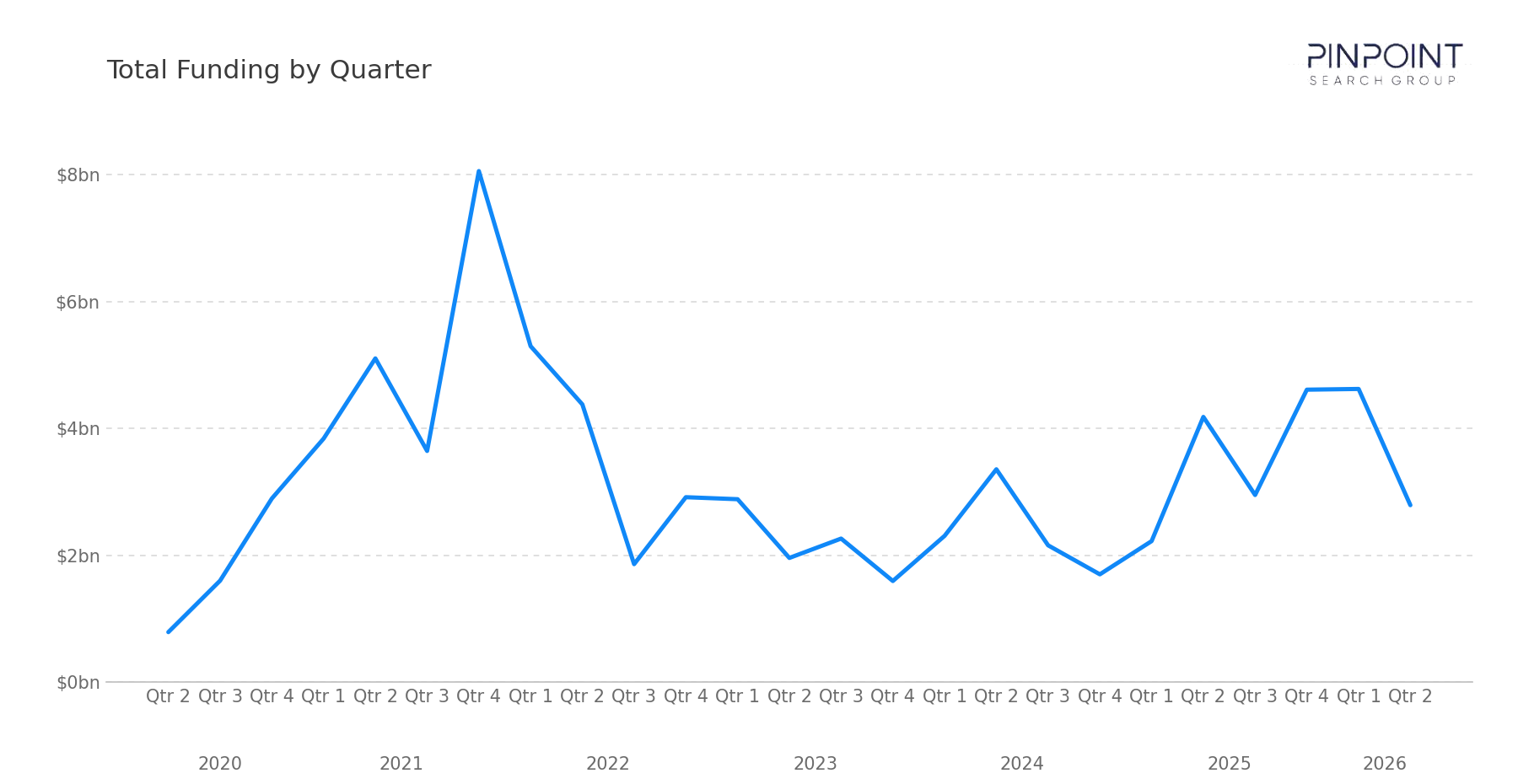
As of this writing, the first half of 2026 put both sides of the pattern on display in back to back quarters. Q1 was a surge: $4.62B deployed across 128 rounds, more than double the year before. Q2 went the other way. Funding eased while M&A hit the highest quarterly deal count we’ve ever tracked, and roughly seven in ten rounds were Seed or Series A.
Two consecutive quarters, nearly opposite shapes, and both generated waves of GTM hiring plans drawing from the same bench through the back half of the year.
Whenever you’re reading this, the current version of that picture is in our latest quarterly report. The numbers will have moved. The underlying constraint doesn’t move much.
This competition for talent creates noise, and not the good kind.
The Tier 1 pool is receiving more bad messages, not better ones. Their threshold for engaging keeps rising. Generic recruiter outreach gets ignored faster than it did a year ago, and every funded vendor pitching the same story (fresh funding, customer momentum, killer tech) starts blending into the same feed.
This is where recruitment strategy and recruitment activity separate. Activity is submitting candidates. Strategy is reaching the right operators in language they recognize, with context that survives their skepticism. In a tight pool, the bar shifts almost entirely to the second one.
For investors, the same constraint shows up across the whole portfolio at once.
Every funded company in a portfolio is hiring against the same bench, often for the same profiles, sometimes in the same quarter. A missed senior GTM hire becomes months of slowed execution, and at the portfolio level those months add up quickly.
The pattern we see when GTM hires miss across portfolio companies is consistent: the point of failure isn’t candidate availability. Execution level recruitment planning tends to be an afterthought inside otherwise extensive planning. Investors track milestones, deployment, and ARR. All of it traces back to employee execution.
In a market dominated by the AI conversation, talent is still the constraint. Humans buy from humans. That’s what continues to drive demand for GTM.
Hiring discipline is the most underrated factor in landing the people the round was raised to hire. When building teams, the quality of recruitment doesn’t have to drop just because the role isn’t at the executive level. Discipline can and should be maintained.
The capital cycle will keep changing shape. Whether a team lands the operators it raised the money to hire mostly comes down to that discipline.
Pinpoint Search Group tracks every disclosed cybersecurity vendor funding round and acquisition. The quarterly reports are free to read; the full per deal dataset is available by subscription.
Insights on cybersecurity recruitment, talent strategy, and the cyber vendor landscape.
Back to Blog Contact Us